


- Pediatric Epilepsy & Febrile Seizures Clinic
- Cerebral Palsy Clinic
- Pediatric Headache & Migraine Clinic
- Pediatric Movement Disorders Clinic
- Genetic & Neurometabolic Neurology Clinic
- Pediatric Nerve & Muscle Disorders Clinic
- Developmental Delay & Early Intervention Clinic
- Autism, ADHD, Learning Difficulties & Behavioural Neurology Clinic
- Pediatric Neurodiagnostic Lab (EEG, NCS, EMG, Evoked Potentials/BERA)
Cerebral Palsy Clinic
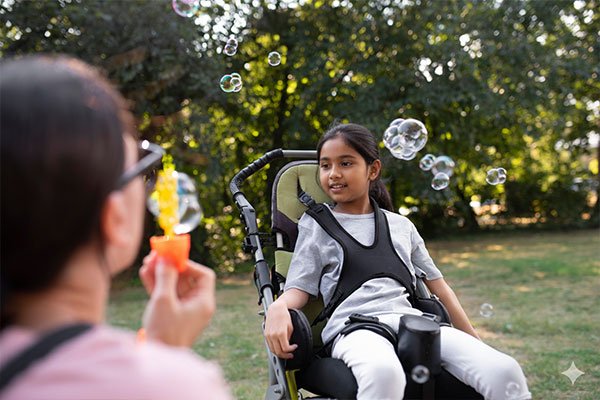
Cerebral palsy (CP) is a group of conditions in which the developing brain is injured early in life, leading to long-term problems with movement, posture and muscle tone. It is non-progressive (the brain injury does not keep worsening), but the way the child moves and functions can change as they grow. Children with CP may be stiff or floppy, delayed in milestones (sitting, standing, walking), toe-walk, scissor their legs, or use one hand much more than the other early on. Some may also have problems with speech, vision, swallowing, learning, epilepsy or behaviour.
At the Cerebral Palsy Clinic, Vishwalata NeuroConnect, our focus is not on “labeling” alone, but on improving the child’s abilities and quality of life through early diagnosis, structured rehabilitation and family-centred planning.
Understanding Cerebral Palsy
Cerebral palsy happens when the developing brain is damaged before birth, during delivery or in the first years of life. Common reasons include extreme prematurity, lack of oxygen around birth, severe jaundice, brain infections (like meningitis/encephalitis), stroke in the newborn period, or brain malformations. In many children, the exact cause is never fully known – but nothing the parents did or did not do “caused” CP.
The main types you may hear about are:
- Spastic CP : stiff, tight muscles (most common; can be diplegia - mainly leg s, hemiplegia - one side, or quadriplegia - all four limbs)
- Dyskinetic / dystonic CP : abnormal twisting or writhing movements
- Ataxic CP : problems with balance and coordination
- Mixed forms : features of more than one type
CP is not a progressive degenerative disease; with the right therapy and support, many children learn to sit, stand, walk (with or without support), communicate and attend school.

- Antenatal: prematurity, intrauterine growth restriction, infections during pregnancy, brain malformations, genetic causes.
- Perinatal: birth asphyxia, complicated labour, neonatal seizures, severe jaundice (kernicterus).
- Postnatal: meningitis, encephalitis, head injury, stroke in infancy.
There is no single “cure” tablet or surgery; the aim is to maximize function and prevent complications.
Core components are :
- Physiotherapy & occupational therapy: tone management, stretching, strengthening, balance, fine-motor training, positioning, ADL training.
- Speech & feeding therapy: for communication, swallowing, drooling, oral-motor control.
- Medications for spasticity or dystonia (e.g., baclofen, benzodiazepines), botulinum toxin injections for focal spasticity, and antiepileptic drugs when seizures are present.
- Orthotics & mobility aids: AFOs, standing frames, walkers, wheelchairs - customised according to age and GMFCS level.
Orthopaedic / neurosurgical options (selective dorsal rhizotomy, tendon lengthening, intrathecal baclofen) in carefully chosen children, usually in collaboration with specialised centres.
At present, stem cell therapy for cerebral palsy is considered experimental.
Some small studies have suggested potential benefit, but evidence is not strong enough to recommend it as routine treatment; there are also concerns about cost, regulatory standards, and long-term safety.
International guidelines currently advise that stem cells for CP should only be given within well-designed clinical trials, with full ethical oversight and transparent risk–benefit discussion.
At Vishwalata NeuroConnect we do not over-promise “cure” through stem cells; instead, we focus on proven interventions (early rehab, tone management, comorbidity control) and provide honest counselling if families are considering research programmes elsewhere.
Clinical Insights
Conditions We Manage in the Cerebral Palsy & Developmental Clinic
Spastic diplegic, hemiplegic, quadriplegic CP
Dystonic / dyskinetic and ataxic CP
High-risk infants (prematurity, NICU stay, HIE) - early screening and intervention
Children with delayed gross/fine motor milestones, but diagnosis not yet clear
CP with associated epilepsy, feeding difficulties, drooling, vision/hearing problems, learning and behavioural issues
Orthopaedic complications of CP - hip subluxation risk, contractures (with orthopaedic partners)
Red Flags - When Should Parents Seek a Pediatric Neurology Opinion?
Consult a specialist early if you notice in your baby/child:
- Motor delay: not holding head by 4 months, not sitting by 8–9 months, not standing by 12-14 months, not walking by 18 months.
- Early hand preference (using one hand much more than the other) before 1 year.
- Very stiff or very floppy limbs, scissoring of legs, persistent fisting of hands.
- Toe-walking, frequent falls, or difficulty using hands for play / feeding.
- Problems with feeding, choking, poor weight gain, or excessive drooling.
- Associated seizures, visual/hearing concerns or regression in previously gained milestones.
- Early identification allows early intervention, which is the single most important factor in improving long-term outcomes in CP.
Why Choose NeuroConnect for Cerebral Palsy Care?


Early Support, Better Futures
If your child has been diagnosed with cerebral palsy, or you are worried about delayed milestones, stiffness or abnormal posture, timely evaluation can make a big difference.
Book an appointment at the Cerebral Palsy & Developmental Clinic, Vishwalata NeuroConnect to:
- Get a clear diagnosis and stage-wise plan
- Start or optimise physiotherapy, occupational and speech therapy
- Discuss tone management options (medicines, botulinum toxin, orthotics)
- Receive honest guidance about stem cell therapy and other advanced options
Call / WhatsApp / Book online for a consultation with our pediatric neurologist in Navi Mumbai (Vashi | Koparkhairane). Whenever possible, bring your child’s birth records, growth chart, past reports and therapy notes for a comprehensive review