


- Pediatric Epilepsy & Febrile Seizures Clinic
- Cerebral Palsy Clinic
- Pediatric Headache & Migraine Clinic
- Pediatric Movement Disorders Clinic
- Genetic & Neurometabolic Neurology Clinic
- Pediatric Nerve & Muscle Disorders Clinic
- Developmental Delay & Early Intervention Clinic
- Autism, ADHD, Learning Difficulties & Behavioural Neurology Clinic
- Pediatric Neurodiagnostic Lab (EEG, NCS, EMG, Evoked Potentials/BERA)
Developmental Delay
& Early Intervention Clinic

Every child grows at their own pace – but when milestones like head control, sitting, walking, talking or social interaction are significantly late, it is called developmental delay. Sometimes this is mild and temporary; sometimes it is the first sign of a neurological, genetic, metabolic, hearing, vision or environmental issue that needs support.
At the Developmental Delay & Early Intervention Clinic, Vishwalata NeuroConnect, our pediatric neurologist carefully evaluates your child’s development and creates a structured, family-centred plan to help them reach their best potential as early as possible.
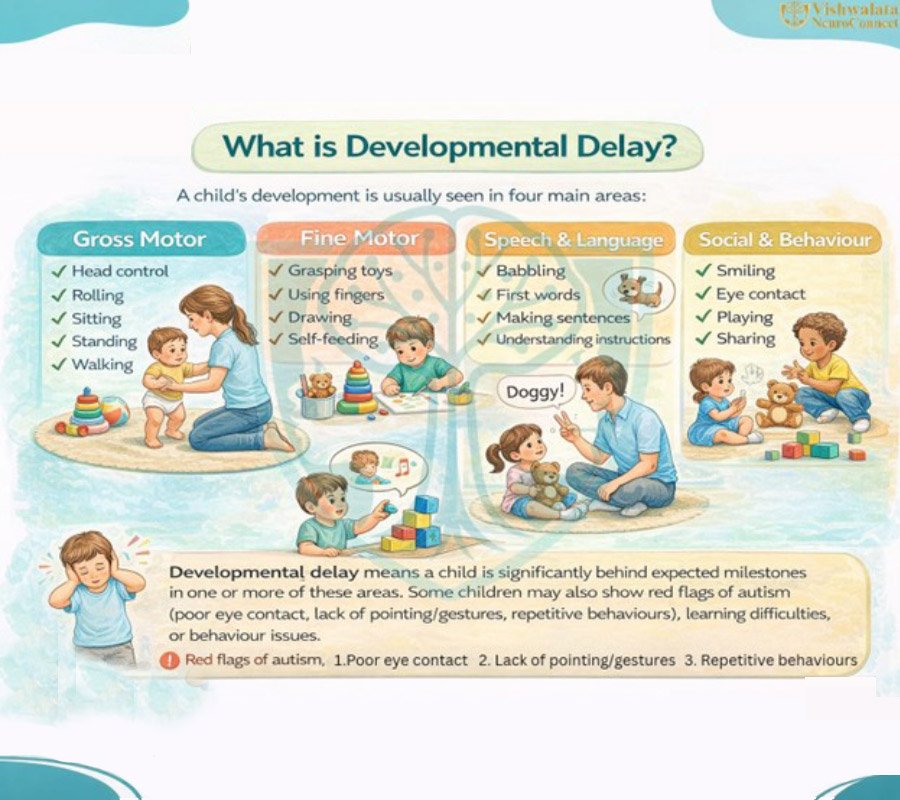
What is Developmental Delay?
A child’s development is usually seen in four main areas:
- Gross motor: head control, rolling, sitting, standing, walking
- Fine motor: grasping toys, using fingers, drawing, self-feeding
- Speech & language: babbling, first words, making sentences, understanding instructions
- Social & behaviour: smiling, eye contact, playing, sharing, interaction with family and peers
Developmental delay means a child is significantly behind expected milestones in one or more of these areas. Some children may also show red flags of autism (poor eye contact, lack of pointing/gestures, repetitive behaviours), learning difficulties, or behaviour issues.
Early evaluation is crucial because:
Some causes are treatable or partially reversible.
- Early therapy (0–5 years) can dramatically improve skills.
- Clinical Insights & Role of Rehabilitation (Expandable Detail)
- Hearing or vision impairment
- Possible causes of developmental delay
- Neurometabolic and neurodegenerative disorders
- Autism spectrum disorder, ADHD and specific learning disorders
- Parents receive clear guidance rather than mixed advice from different sources.
- Perinatal brain injury / cerebral palsy (prematurity, birth asphyxia, severe jaundice, neonatal seizures)
-
Genetic / chromosomal conditions (Down syndrome and many
others)
- Environmental factors: poor stimulation, chronic illness, malnutrition, psychosocial adversity
What Are Genetic Neurological & Neurometabolic Disorders?
- Detailed prenatal, birth and developmental history
- Neurological and physical examination; growth and nutrition review
- Standardised developmental screening & autism tools (where indicated)
- Hearing and vision assessment (with ENT/ophthalmology)
- MRI brain, EEG or metabolic/genetic tests only when truly indicated, based on clinical suspicion

Role of Rehabilitation – the core of management
There is no single tablet for developmental delay. Improvement comes from systematic early intervention, which may include:
- Physiotherapy: for gross-motor delays, low tone or spasticity; posture, balance and gait training.
- Occupational therapy (OT): fine-motor skills, hand function, self-care (feeding, dressing, writing), sensory integration.
- Speech & language therapy: for delayed speech, unclear words, stammering, social communication problems.
- Special education & early stimulation programmes: structured teaching adapted to the child’s level.
- Behavioural therapy & parent training: especially important in autism/ADHD – helping parents handle tantrums, rigidity, attention problems and building communication.
Conditions We Manage
Cerebral palsy and motor delay
Autism spectrum disorder (ASD) and social communication delay
High-risk infant follow-up (preterm, NICU stay, HIE, severe jaundice, neonatal seizures)
ADHD and associated learning difficulties (neurology perspective, with referral to psychologists/special educators)
Developmental delay related to genetic, neurometabolic, neuromuscular, vision/hearing problems
Borderline or school-age learning and attention issues where neurological input is required
Global developmental delay (GDD) and isolated motor/speech delay

Red Flags - When Should Parents Seek an Evaluation?
Book a pediatric neurology consultation if your child:
- Does not smile by 3 months or has very poor eye contact
- Has no head control by 4 months, not sitting by 8–9 months, not standing by 12–14 months, or not walking by 18 months
- Uses no meaningful words by 16–18 months, or no 2–3 word phrases by 2.5–3 years
- Does not respond to name, avoids eye contact, does not point or show objects, or lives “in their own world”
- Loses previously acquired skills (e.g., stops saying words, stops walking) – developmental regression
- Has recurrent seizures, abnormal movements, or strong family history of neurological disease
- Has motor delay along with feeding issues, poor growth, unusual facial features or organ involvement
- Early recognition means better brain plasticity, better response to therapy and less parental guilt and confusion.
Why Choose Vishwalata NeuroConnect for Developmental Delay & Early Intervention?


Early Help, Lifelong Impact
If you are worried that your child is “late compared to other kids” in sitting, walking, talking or social interaction, don’t wait for others to say “let’s see for one more year.”
Book an appointment at the Developmental Delay & Early Intervention Clinic, Vishwalata NeuroConnect to:
- Get a clear, honest assessment of your child’s development
- Understand whether tests are needed (and avoid unnecessary ones)
- Receive a structured therapy and home-activities plan
- Feel supported with ongoing review and guidance
Call / WhatsApp / Book online to consult our pediatric neurologist in Navi Mumbai (Vashi | Koparkhairane). Bringing vaccination card, growth chart, previous reports and short videos of your child’s play/interaction can be very helpful.