


- Pediatric Epilepsy & Febrile Seizures Clinic
- Cerebral Palsy Clinic
- Pediatric Headache & Migraine Clinic
- Pediatric Movement Disorders Clinic
- Genetic & Neurometabolic Neurology Clinic
- Pediatric Nerve & Muscle Disorders Clinic
- Developmental Delay & Early Intervention Clinic
- Autism, ADHD, Learning Difficulties & Behavioural Neurology Clinic
- Pediatric Neurodiagnostic Lab (EEG, NCS, EMG, Evoked Potentials/BERA)
Pediatric Movement
Disorders Clinic

What is Movement Disorder ?
Abnormal movements in children can be confusing and scary for parents – is it “just a habit,” a side effect of stress, or something serious in the brain? Pediatric movement disorders include tics, tremors, jerky or twisting movements, walking difficulties, abnormal postures, episodic stiffness or floppiness. At the Pediatric Movement Disorders Clinic, Vishwalata NeuroConnect, our pediatric neurologist carefully evaluates these symptoms to find the cause, rule out serious conditions, and create a practical treatment and rehabilitation plan so your child can move, play and learn with confidence.
Understanding Movement Disorders in Children
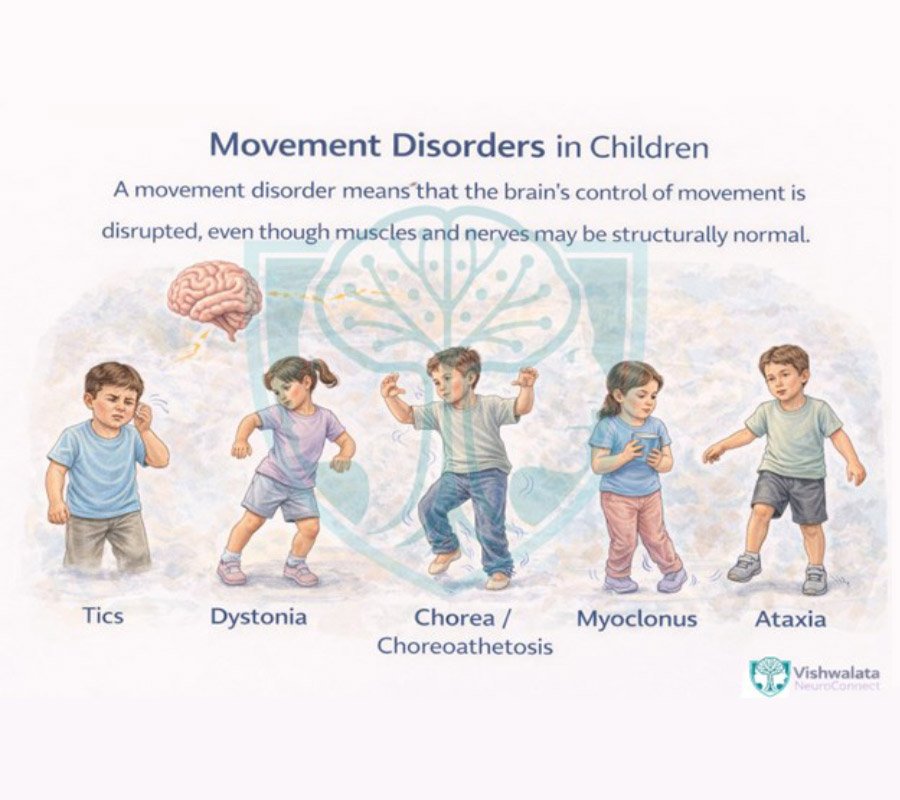
A movement disorder means that the brain’s control of movement is disrupted, even though muscles and nerves may be structurally normal. In children, this may appear as:
- Tics: repeated blinking, throat-clearing, facial grimacing, shoulder shrugging or vocal sounds that the child can briefly suppress but feel “forced” to do.
- Dystonia: abnormal twisting or sustained postures of neck, trunk or limbs.
- Chorea / choreoathetosis: irregular, dance-like or writhing movements.
- Myoclonus: sudden, brief jerks of muscles.
- Tremor: rhythmic shaking of hands, head or voice.
- Ataxia: clumsy, unsteady walking and poor coordination.
Some movements are benign and self-limited, while others may signal genetic, metabolic, autoimmune, infectious or structural brain disease. Our job is to distinguish normal variants and “habits” from true movement disorders and to treat those that need intervention.
Common causes of pediatric movement disorders include:
- Primary (genetic) conditions: Tourette syndrome, primary dystonias, hereditary ataxias, benign familial tremor.
- Secondary causes: perinatal brain injury / cerebral palsy, infections (including post-streptococcal chorea), autoimmune disorders (PANDAS/PANS, autoimmune encephalitis), metabolic or genetic diseases (e.g., Wilson’s disease), drug side effects, structural lesions (stroke, tumour), post-hypoxic or post-infectious states.
- Functional (psychogenic) movement disorders: abnormal movements related to stress or psychological factors, where the brain “software” is affected rather than its structure.
- Evaluation typically includes detailed history (onset, triggers, progression, family history), neurological examination, video review of events, and when needed: blood tests (including copper studies, metabolic / autoimmune work-up), MRI brain, EEG, or genetic testing.
Management is tailored to the exact diagnosis:
Behavioural and habit-reversal therapy for tics and some functional movements.
- Medications (e.g., for tics, dystonia, chorea, myoclonus, tremor) carefully chosen to balance benefit and side effects.
- Treating underlying triggers: infections, autoimmune processes, metabolic derangements, medication-induced causes.
- Rehabilitation: physiotherapy, occupational therapy and speech therapy for dystonia, ataxia or CP-related movement problems.
In selected severe cases, botulinum toxin injections or referral for deep brain stimulation (DBS) may be considered at specialised centres. Psychological support for child and family when anxiety, stress or ADHD/OCD coexist with movement disorders (very common in Tourette syndrome and tics).
Clinical Insights - Causes & Management
Conditions Treated at the Pediatric Movement Disorders Clinic
Simple and complex motor and vocal tics, Tourette syndrome
Dystonia - focal (neck, limb) and generalized
Myoclonus, jerky movements, startle disorders
Ataxia and gait disorders - acute and chronic
Chorea and choreoathetosis (including Sydenham chorea, post-hypoxic and genetic causes)
Movement abnormalities associated with cerebral palsy, metabolic disorders, Wilson’s disease, autoimmune encephalitis
Tremor (essential tremor, enhanced physiologic,
medication-related)
Functional (psychogenic) movement disorders - diagnosis, explanation and multidisciplinary management

Red Flags - When Should Parents Seek Help?
You should seek a pediatric neurology consultation if you notice:
- New abnormal movements that are repetitive or interfering with daily activities, speech or sleep
- Movements associated with regression in milestones, school decline, behaviour or personality change
- Abnormal movements with headache, seizures, vomiting, imbalance or vision problems
- Sudden onset of chorea or dystonia following fever or infection
- Suspected Wilson’s disease signs - movement disorder with liver issues, psychiatric changes, or family history
- Movements that are progressively worsening over weeks to months
- Treat as an emergency if movements are accompanied by altered sensorium, severe headache, continuous seizures, breathing difficulty or acute weakness.
Why Vishwalata NeuroConnect for Pediatric Movement Disorders?


Bring Clarity to Your Child’s Movements
If your child has tics, unusual jerks, twisting postures, shaky hands or unsteady walking, you don’t have to keep guessing whether it’s a “habit” or something serious.
Book an appointment at the Pediatric Movement Disorders Clinic, Vishwalata NeuroConnect to:
- Get a clear diagnosis and explanation in simple language
- Understand which movements need treatment and which will improve with time
- Start a personalised management and rehabilitation plan
- Receive guidance for school, sports and daily activities
Call / WhatsApp / Book online for a consultation with our pediatric neurologist in Navi Mumbai (Vashi | Koparkhairane). Bringing short mobile videos of the movements is extremely helpful for accurate assessment