


- Pediatric Epilepsy & Febrile Seizures Clinic
- Cerebral Palsy Clinic
- Pediatric Headache & Migraine Clinic
- Pediatric Movement Disorders Clinic
- Genetic & Neurometabolic Neurology Clinic
- Pediatric Nerve & Muscle Disorders Clinic
- Developmental Delay & Early Intervention Clinic
- Autism, ADHD, Learning Difficulties & Behavioural Neurology Clinic
- Pediatric Neurodiagnostic Lab (EEG, NCS, EMG, Evoked Potentials/BERA)
Pediatric Headache
& Migraine Clinic

Headache is common in children, but recurrent or severe headaches are not “just stress” or “just eyesight” every time. Many children suffer silently or miss school because of migraine and other headache disorders. At the Pediatric Headache & Migraine Clinic, Vishwalata NeuroConnect, we specialise in child-friendly evaluation and treatment of headaches, so that your child can get back to school, play and daily life with confidence.
Understanding Headache & Migraine in Children
Children may not say “I have a migraine” – they may just hold the head, cry, lie down, vomit, avoid light or noise, or appear irritable and quiet.
Migraine in children is often throbbing, can be on one or both sides, and is commonly associated with nausea, vomiting, sensitivity to light/sound, abdominal pain, or dizziness. Attacks may last 1–72 hours and often run in families.
Tension-type headache gives a dull, pressure-like pain across the forehead or back of head, often related to posture, eye strain, long screen time or stress.
Other causes include sinusitis, vision problems, sleep issues, neck problems, high blood pressure, infection, or rarely brain structural problems.
Most pediatric headaches are benign and treatable, but careful assessment is needed to rule out serious causes and to avoid overuse of painkillers.
There is usually a genetic tendency – the brain becomes extra sensitive to certain triggers: irregular meals, dehydration, poor sleep, stress, exams, strong smells, travel, certain foods, or hormonal changes in older girls. Abnormal activation of pain pathways and blood vessels in the brain leads to a migraine attack.

- Careful history and examination - pattern, frequency, triggers, associated symptoms, school impact, family history, sleep & lifestyle review.
- Targeted tests only when needed - vision check, blood pressure, basic labs; MRI or other imaging only if red flags are present.
- Acute (rescue) treatment plan - which medicine, in what dose and how early to give at the start of an attack (e.g., paracetamol/NSAID ± antiemetic; triptan in older children when appropriate), plus rest in a quiet, dark room and hydration.
- Non-drug: strict lifestyle modification and trigger management (see below).
- Drug: in frequent or disabling attacks, age-appropriate preventive medicines (e.g., flunarizine, propranolol, topiramate, amitriptyline, etc.) tailored to child’s profile and comorbidities.
Clinical Insights & Preventive Strategies
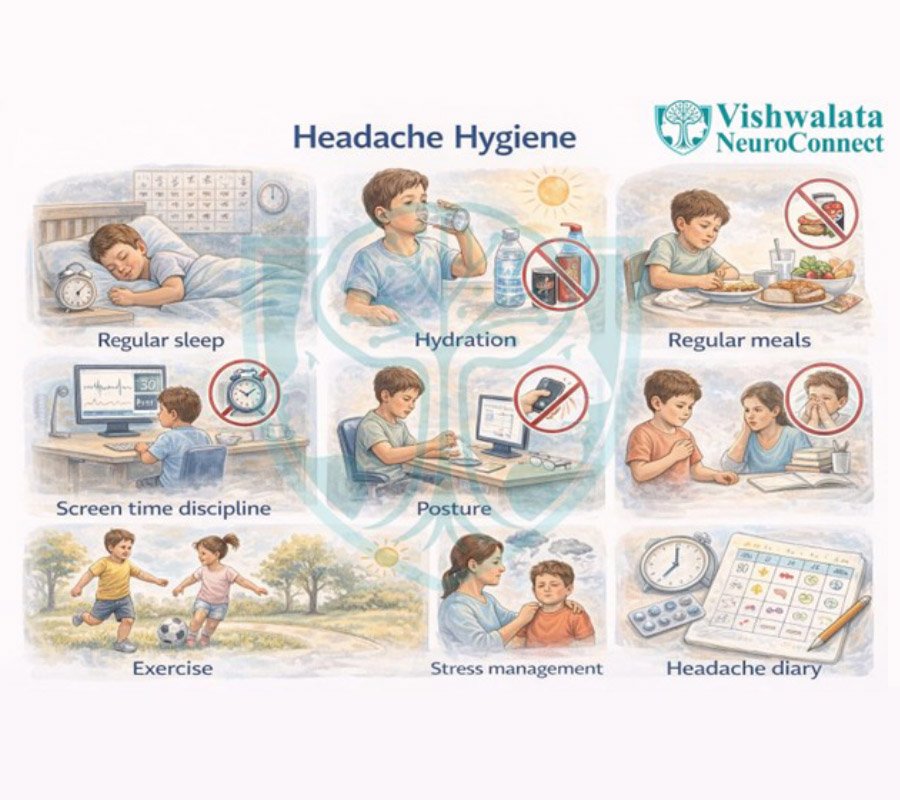
Evidence-based preventive strategies you’ll hear from us
- Regular sleep schedule: adequate duration for age, no late nights on school days.
- Hydration: frequent water intake; limit colas/energy drinks.
- Regular meals: avoid skipping breakfast; balanced diet, limited junk and very sugary foods.
- Screen time discipline: frequent breaks, avoid prolonged mobiles close to eyes, no screens in bed.
- Posture: proper desk/chair height; avoid continuous head-down posture.
- Exercise: at least 30-40 minutes of outdoor play / physical activity most days.
- Stress management: open communication about school/exam stress; relaxation/breathing exercises in older children.
- Headache diary: simple chart noting date, duration, severity, triggers, medicines - extremely useful for fine-tuning treatment.
Conditions Treated at the Pediatric Headache & Migraine Clinic
Pediatric migraine (with or without aura)
Chronic migraine and high-frequency episodic migraine
Tension-type headache and posture/screen-related headaches
Headache with dizziness / vertigo (including vestibular migraine)
Headache associated with vision problems, sinusitis, hormonal changes - neurological evaluation plus cross-referral as needed
Evaluation of secondary headache red flags - raised intracranial pressure, CNS infection, hypertension, post-traumatic headaches
Headache in children with epilepsy, cerebral palsy, developmental disorders or sleep problems

Red Flags - When Should Parents Worry?
Consult urgent medical / emergency care if your child has:
- Sudden, severe “worst headache” of life, or headache with projectile vomiting
- Headache with fever, neck stiffness, rash, or altered behaviour (possible meningitis/encephalitis)
- Headache with new weakness, facial droop, seizures, double vision, difficulty walking or speaking
- Headache after a significant head injury, especially with vomiting, drowsiness or confusion
Book an early pediatric neurology visit if:
- Headaches occur more than 2-3 times per month, or disturb school and play
- Painkillers are being used more than 8-10 days a month
- Headaches are early-morning, worsen on coughing/straining, or wake the child from sleep
- There is a change in personality, school performance, or visual complaints along with headache
- You are simply unsure whether this is migraine, sinusitis, eye strain or something else - and want clarity.
Why Vishwalata NeuroConnect for Pediatric Headaches & Migraine?


Help Child Live Headache-Free Your
If your child frequently complains of headache, eye/forehead pain, nausea with travel or light and sound sensitivity, it’s time to get a structured evaluation rather than repeatedly using painkillers.
Book an appointment at the Pediatric Headache & Migraine Clinic, Vishwalata NeuroConnect to:
- Understand exactly what type of headache your child has
- Receive a simple, stepwise treatment and prevention plan
- Get guidance for school, screens, sports and exams
- Reassure your child (and yourself) with clear answers
Call / WhatsApp / Book online for a consultation with our pediatric neurologist in Navi Mumbai (Vashi | Koparkhairane). Bringing a headache diary or notes about timing, triggers and medicines already tried is very helpful.